

Best Specialty Coffee Beans 2026: Top Picks & Buying Guide
Table of Contents
- What Makes Specialty Coffee Beans Worth Buying in 2026
- How to Choose the Best Specialty Coffee Beans for Your Taste
- Single Origin vs Blend Coffee: Which One Fits Your Routine
- How to Brew Specialty Coffee at Home Without a Barista Setup
- Best Coffee Subscription Services 2026: What Fresh Delivery Actually Looks Like
- Storage, Freshness, and Getting Your Money's Worth
- Frequently Asked Questions
Last Updated: September 28, 2026
What Makes Specialty Coffee Beans Worth Buying in 2026
Specialty coffee beans are coffee beans that score 80 points or higher on a standardized 100-point quality scale, graded for defects, flavor clarity, and overall cup quality. That score is the line between commodity coffee and coffee worth seeking out.
This guide from Kaos coffee breaks down what actually separates the best specialty coffee beans 2026 has to offer from the bags that disappoint you three sips in. Below, we cover grading, roast dates, flavor matching, and how to brew at home without a barista setup.
Most buyers focus on brand names and pretty packaging. The real signals are far less glamorous.
The 80-Point Grading Standard
The 80-point threshold is set by the Specialty Coffee Association, a trade body that defines grading standards for the industry. A licensed Q Grader evaluates beans across categories including fragrance, flavor, acidity, body, balance, and sweetness. Beans scoring below 80 are technically commodity coffee, regardless of how they're marketed.
What most guides miss is that the score itself tells you very little about whether you'll enjoy the coffee. A bright, acidic Ethiopian bean can score 88 and still taste wrong to someone who wants a heavy, chocolatey cup. Use the score as a floor, not a target.
Why Roast Date Beats 'Best By' Dates
A roast date tells you when the beans were actually roasted. A "best by" date tells you almost nothing useful. Many roasters print best-by dates months out because the packaging, not the coffee, sets that window.
Fresh-roasted beans hit their peak flavor roughly 4 to 14 days after roasting. After about six weeks, most beans taste flat no matter how well you store them. If a bag doesn't list a roast date, that's a signal to walk away.
How to Choose the Best Specialty Coffee Beans for Your Taste
Match the bean to how you actually drink coffee, not to what sounds impressive on a menu. A single-origin Ethiopian natural process bean is a poor fit for someone who drowns their cup in oat milk and caramel syrup.
Start with roast level, then work backward to origin. That's the order that saves you money.
Flavor Profiles and Roast Levels
- Light roast: Bright, fruity, higher acidity. Best for pour-over and black coffee drinkers.
- Medium roast: Balanced sweetness and body. The safest all-purpose choice.
- Dark roast: Bold, smoky, lower acidity. Works well with milk and sugar.
- Natural process: Fruit-forward, heavier body. Distinctive but polarizing.
- Washed process: Cleaner, more consistent cup. Easier to brew well.
What to Skip When Buying Beans
The biggest mistake is buying based on origin hype alone. "Single origin" doesn't mean better. It means the beans came from one place, which makes the flavor more specific, not more enjoyable.
Skip bags with no roast date. Skip beans sold in clear containers sitting under bright lights, since light degrades coffee oils. And skip anything labeled "gourmet" without a score or origin details, because that word carries no legal or industry definition.
Single Origin vs Blend Coffee: Which One Fits Your Routine
Single origin coffee comes from one farm, region, or country, while blends combine beans from multiple sources to create a consistent, repeatable flavor. Neither is objectively better. The choice depends on whether you want variety or reliability.
Single origin suits drinkers who want to taste how a specific region expresses itself, and who don't mind that the next harvest may taste different. Blends suit anyone who wants the same cup every morning, which describes most people with demanding schedules.
Here's the practical split:
| Factor | Single Origin | Blend |
|---|---|---|
| Flavor consistency | Varies by harvest | Repeatable year-round |
| Best for | Exploring flavor | Daily routine |
| Brewing forgiveness | Lower | Higher |
| Price stability | Fluctuates | More predictable |
For a busy parent or a freelancer pulling shots between calls, a blend is usually the smarter buy. Consistency beats novelty when you just need the cup to work.
How to Brew Specialty Coffee at Home Without a Barista Setup
Good coffee at home needs three things: fresh beans, a consistent grind, and control over water temperature. You don't need a commercial machine or a training course.
The pour-over method is the most forgiving starting point. It's also the cheapest way to taste what a bean actually offers.
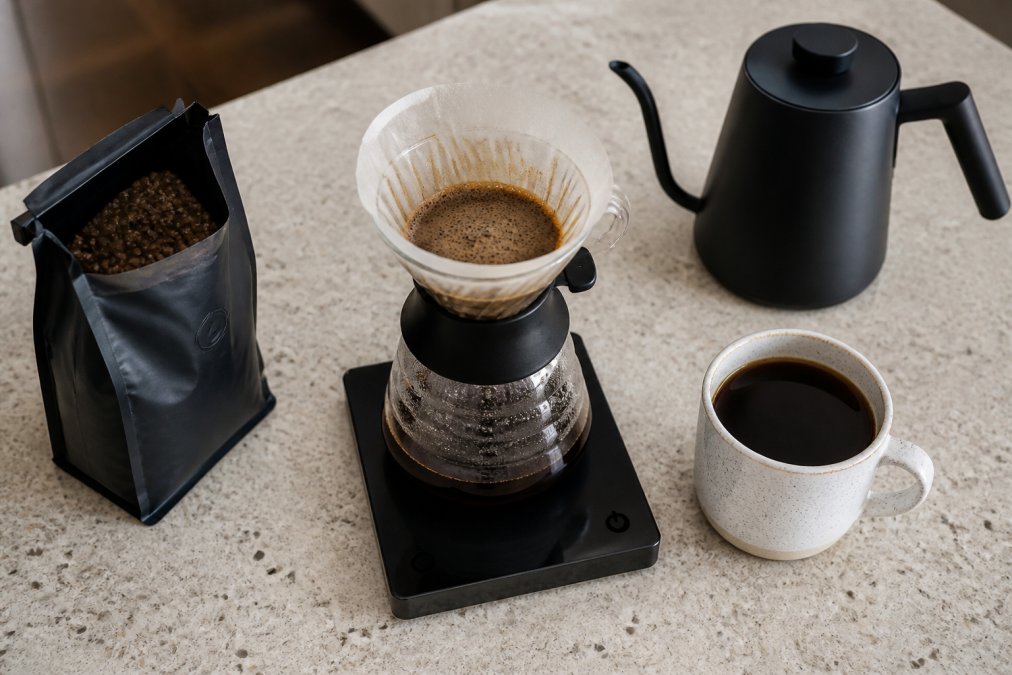
A simple routine:
- Weigh 15 grams of whole beans and grind them medium-coarse.
- Heat water to just off boiling, around 200°F.
- Rinse the filter, then add the grounds.
- Pour a small amount to bloom the coffee, and wait 30 seconds.
- Pour the rest in slow circles, finishing around 2:30 total.
Grind fresh every time. Pre-ground coffee loses most of its aromatics within days, which is the single biggest reason home coffee tastes flat.
Best Coffee Subscription Services 2026: What Fresh Delivery Actually Looks Like
A coffee subscription delivers beans on a recurring schedule, ideally roasted close to the ship date. The category's whole value proposition rests on freshness, and that's exactly where most services fall short.
The common complaint is real: beans that arrive already a week or more past roast. That gap erases most of the benefit you're paying for.
When evaluating the best coffee subscription services 2026 offers, check three things:
- Roast-to-ship window: How many days between roasting and shipping?
- Schedule flexibility: Can you skip, pause, or change frequency without a phone call?
- Bag sizing: Do they offer small bags so you can test before committing?
At Kaos coffee, beans are roasted to order rather than pulled from warehouse stock, which shortens the gap between roast and doorstep.
Storage, Freshness, and Getting Your Money's Worth
Store beans in an airtight, opaque container at room temperature, away from light, heat, and moisture. Skip the freezer unless you're storing a large supply for months, and never store beans in the fridge.
The pantry problem is real. Buy coffee and let it sit for two months, and you're drinking something closer to cardboard than coffee. The fix isn't a better container. It's buying less, more often.
Whole beans stay fresher than pre-ground because the oils stay protected inside the bean. Grinding exposes surface area and starts the clock. If convenience is the priority, pods solve that trade-off, though they cost more per cup than whole beans.
A quick freshness check:
- Bag has a printed roast date within the last 3 weeks
- Beans smell sweet and aromatic when you open the bag
- Beans feel firm, not oily or brittle
- Grinder produces an even grind, not a mix of dust and chunks
Frequently Asked Questions
What makes coffee beans 'specialty' grade?
Specialty coffee beans score 80 or higher on the 100-point scale used by the Specialty Coffee Association. Licensed graders assess factors including flavor, acidity, body, balance, and absence of defects. Beans scoring below 80 are classified as commodity coffee. In practice, that score means the beans were grown at higher elevations, picked at peak ripeness, and processed with more care than standard grocery store coffee.
Does roast date matter when buying specialty coffee beans?
Roast date matters more than any 'best by' date on the bag. Coffee beans peak in flavor roughly 4 to 14 days after roasting. After about 4 to 6 weeks, the oils oxidize and the flavor flattens noticeably. When you buy specialty coffee beans, look for the actual roast date printed on the bag, not just a freshness window. Beans roasted to order and shipped within days of roasting give you the widest window to brew at peak flavor.
How should I store specialty coffee beans to keep them fresh?
Store beans in an airtight, opaque container at room temperature, away from light, heat, and moisture. Do not refrigerate them; condensation damages the oils. Freezing works only if you seal beans in an airtight bag with the air pressed out and use them straight from the freezer without thawing and refreezing. Buy in quantities you will finish within 2 to 3 weeks, and grind right before brewing to preserve aroma.
Are expensive specialty coffee beans worth the price?
They can be, if you value flavor and freshness. Specialty beans cost more because of hand-picking, small-lot processing, and higher grading standards. The trade-off is a cup with more distinct flavor and less bitterness than commodity beans. To get your money's worth, buy from roasters who print the roast date, order amounts you will finish within a few weeks, and store beans properly. If beans sit in your pantry for two months, even great coffee loses its edge.
The real challenge with specialty coffee isn't finding good beans. It's getting them fresh enough to matter, on a schedule that fits a life that doesn't slow down. Kaos coffee roasts to order so beans ship close to their peak, offers blends, single-origin options, and convenient pods for days when whole beans aren't practical, and delivers on flexible timing. If you want coffee that actually earns its price, get started with Kaos coffee and taste what fresh-roasted makes possible.