

Buy Fresh Roasted Coffee Online: 2026 Buyer's Guide
Table of Contents
- Why Buy Fresh Roasted Coffee Online Beats Grocery Store Shelves
- How to Buy Fresh Roasted Coffee Online: A Step-by-Step Checklist
- Roasted to Order Coffee Benefits: Why Small Batch Makes a Difference
- How to Store Coffee Beans for Freshness After Delivery
- How to Choose the Best Coffee Subscription Services for Your Routine
- Whole Bean vs Ground Coffee: Which Should You Order?
- Conclusion: Drink Better Coffee Starting This Week
- Frequently Asked Questions
Last Updated: September 30, 2026
Why Buy Fresh Roasted Coffee Online Beats Grocery Store Shelves
Walk into any grocery store and you'll see bags stamped with a "best by" date months into the future. That date tells you almost nothing about when the coffee was actually roasted. When you buy fresh roasted coffee online from a roaster that ships to order, the coffee reaches your door days after roasting, not months. This guide from Kaos coffee breaks down exactly how to spot real freshness, match a roast to your brewer, and store beans so the last cup tastes as good as the first.
The Roast Date Problem: What Those Supermarket Bags Hide
Most supermarket coffee carries a "best by" date, not a roast date. A bag can sit in a warehouse, then a distribution center, then a store shelf for months before you ever see it.
What Freshness Actually Tastes Like in the Cup
Freshly roasted coffee hits differently. You'll notice a brighter aroma when you open the bag, more sweetness in the cup, and a finish that lingers instead of disappearing.
How to Buy Fresh Roasted Coffee Online: A Step-by-Step Checklist
Use this checklist every time you order. It takes about two minutes and saves you from another disappointing bag.
- Find the roast date. It should be printed clearly, not hidden. If a roaster only shows a "best by" date, ask why.
- Check how fast they ship. Roasted-to-order beans should leave the facility within a day or two of roasting.
- Match roast level to your brew method (see below).
- Decide whole bean or ground based on your equipment.
- Confirm delivery speed so beans arrive inside the freshness window.
- Set up a subscription if you drink coffee daily, so you never run out or overbuy.
Check the Roast Date, Not the Best-By Date
A roast date tells you exactly how old the coffee is. A best-by date tells you when the roaster thinks it's still acceptable, which can be months out.
Match the Roast to Your Brew Method
Most buying guides stop at "dark for espresso, medium for drip." That's not enough, because your brewer sets the rules for how fast water pulls flavor out of the grounds, and the roast level changes how much flavor is there to pull. Here's how the major methods actually interact with roast level, grind, and water temperature.
| Brew Method | Best Roast Level | Grind | Water Temp | Why It Works |
|---|---|---|---|---|
| Espresso | Dark to medium-dark | Fine | 195-205°F | Pressure and short contact time need a dense, soluble bean; darker roasts give up their sugars fast and stand up to milk |
| Pour-over | Medium to medium-light | Medium-fine | 195-205°F | Longer, gentler extraction rewards the fruit and acidity that lighter roasts preserve |
| French press | Medium-dark | Coarse | 195-205°F | Full immersion keeps oils in the cup; a coarser grind prevents the muddiness that fine grounds cause |
| Cold brew | Dark to medium-dark | Coarse | Room temp, 12-18 hours | Cold water extracts sweetness and body slowly while leaving most acidity behind |
| Drip machine | Medium | Medium | 195-205°F | Balanced and forgiving; medium roasts tolerate the wider temperature swings of home machines |
| AeroPress | Medium | Medium-fine | 175-205°F | Short, pressure-assisted brew; medium roasts give you room to adjust time and temp without going bitter |
| Moka pot | Medium-dark | Fine | Stovetop steam | Concentrated, espresso-like output; darker roasts resist the scorching that stovetop heat can cause |
- Lighter roasts are denser and less soluble. They need hotter water, a finer grind, or more time to extract fully. If your light roast tastes sour or thin, you're under-extracting.
- Darker roasts are more porous and more soluble. They extract quickly, so they turn bitter fast if you grind too fine or brew too long.
- Match the grind to the brewer first, then the roast to your taste. A great dark roast ground for a drip machine will still taste wrong in a French press.
If you're not sure where to start, order the same single-origin bean in two roast levels and brew them side by side in your usual method. The difference in the cup will tell you more about your palate than any online quiz.
Whole Bean vs. Ground: A Quick Decision
If you own a burr grinder, order whole bean, it holds its peak flavor for weeks longer than pre-ground. If you don't, order ground and choose the grind size that matches your brewer (fine for espresso, medium for drip, coarse for French press and cold brew). Buy smaller bags more often rather than one large bag you can't finish inside the freshness window.
Roasted to Order Coffee Benefits: Why Small Batch Makes a Difference
Roasted to order means your beans are roasted after you place the order, not pulled from a warehouse pallet. Small-batch roasting gives the roaster tighter control over each batch, so the roast profile stays consistent from bag to bag.
The benefits stack up quickly:
- Fresher beans with active aroma compounds
- More consistent flavor across repeat orders
- Less waste, since roasters produce to demand
- Better traceability from farm to bag
How to Store Coffee Beans for Freshness After Delivery
Freshly roasted coffee is still changing the moment it leaves the roaster. Understanding what's happening inside the bag is the difference between storing beans well and storing them badly.
What Degassing Means and Why It Matters
Right after roasting, beans release carbon dioxide, a process called degassing. That CO2 is why a freshly roasted bag puffs up, and why a bag roasted yesterday can taste flat or gassy if you brew it immediately.
Specialty Coffee Association guidance on freshness and storage
The Storage Rules That Actually Protect Flavor
Four enemies degrade coffee: oxygen, light, heat, and moisture. Every storage decision should be measured against those four.
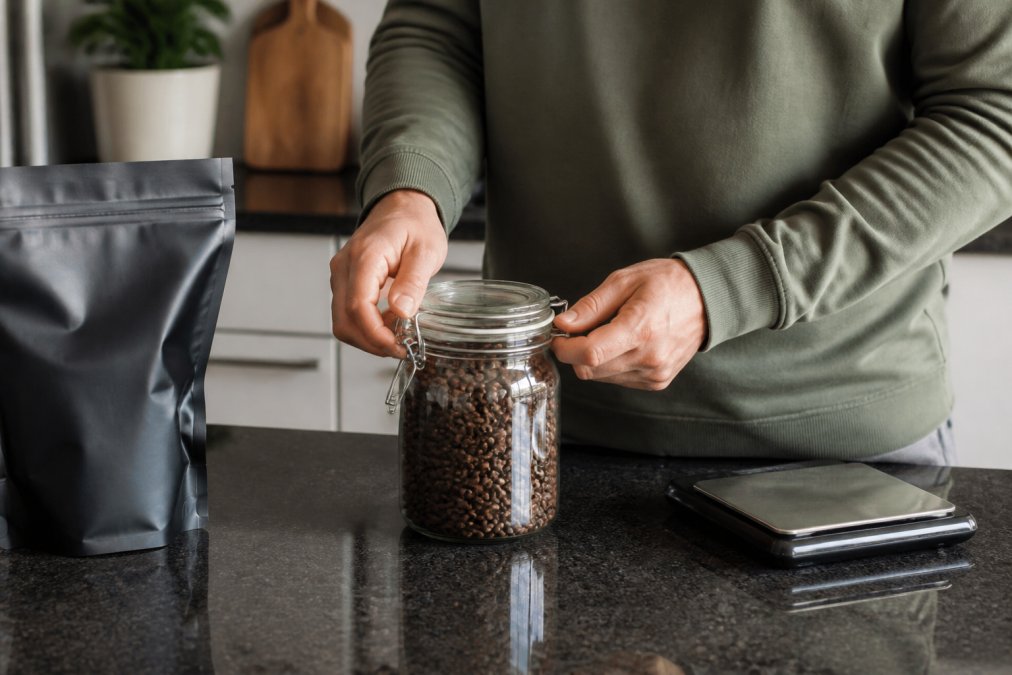
- Airtight container. A one-way valve bag or a sealed canister limits oxygen exposure. A bag rolled shut with a clip is better than nothing but not airtight.
- Opaque, not clear. Light breaks down the oils that carry aroma. A clear glass jar on a sunny counter is one of the worst places for beans.
- Room temperature, not the fridge. The refrigerator cycles through warm and cold every time the door opens, and coffee absorbs nearby odors, including last night's leftovers.
- Buy what you'll finish. A two- to three-week supply is a reasonable target for most daily drinkers. A smaller bag you actually finish beats a bulk bag that goes stale.
The Freezer Trick That Actually Works
Freezing works, but only if you do it right. Portion beans into single-use bags, squeeze out the air, and freeze them. Take out one portion at a time and let it come to room temperature before grinding.
Don't grind before freezing. Ground coffee has far more surface area exposed to oxygen, so it stales faster in the freezer than whole bean does. Freeze whole bean, grind after thawing.
How to Read a Roast Date Like a Pro
Once you know what to look for, a roast date becomes a decision tool rather than a label:
- 0-3 days off roast: Beans are still degassing heavily. Great for espresso if your roaster rested them; often too gassy for pour-over.
- 4-14 days off roast: The sweet spot for most brew methods. Aroma, sweetness, and acidity are in balance.
- 15-30 days off roast: Still drinkable, especially for darker roasts, but brightness fades first.
- 30+ days off roast: Oxidation dominates. Fine for cold brew or a milk-heavy drink, less rewarding as a black cup.
If a bag shows only a best-by date, you can't tell where you are on that curve. That's the single strongest reason to buy from a roaster who prints the roast date.
How to Choose the Best Coffee Subscription Services for Your Routine
The best coffee subscription services let you set your own cadence, skip or pause deliveries, and choose roast level and grind. Flexibility matters more than a discount, because a subscription that ships at the wrong time wastes money and coffee.
Look for three things:
- Adjustable frequency so deliveries match how fast you actually drink coffee
- Easy skip or pause options for travel and busy weeks
- Roast and grind selection so you're not locked into one option
Whole Bean vs Ground Coffee: Which Should You Order?
Whole bean coffee stays fresh longer because the oils and aromas are protected inside the bean. Ground coffee exposes far more surface area to air, so it stales faster, often within days.
Conclusion: Drink Better Coffee Starting This Week
The gap between average coffee and genuinely great coffee comes down to freshness, and freshness comes down to who you buy from. Check the roast date, match the roast to your brewer, store beans properly, and let a subscription handle the timing.
Frequently Asked Questions
How can you tell if coffee beans are fresh?
Check the roast date on the bag, not the best-by date. Fresh roasted coffee tastes best within 5 to 25 days after roasting. Look for beans with a matte, dry surface; shiny, oily beans have usually been sitting for weeks. When you open the bag, fresh beans release a strong aroma and may have a visible bloom when hot water hits them. If the bag has no roast date, treat that as a warning sign.
What does 'roasted to order' mean for coffee quality?
Roasted to order means the roaster waits until you place an order before roasting your beans. That cuts out the weeks of warehouse and shelf time that grocery store coffee goes through. You get beans within days of roasting instead of months, so more of the flavor notes, acidity, and aroma survive. It also means you can order small batch amounts that match how fast you actually drink coffee.
How should I store fresh roasted coffee beans to keep them fresh?
Keep beans in an airtight, opaque container at room temperature, away from light, heat, and moisture. Skip the fridge; condensation ruins beans. For longer storage, freeze beans in a sealed bag with the air pressed out, and scoop what you need without thawing the whole batch. Buy only what you'll drink in two to three weeks. Whole bean coffee stays fresher longer than ground because less surface area is exposed to oxygen.
Is it worth buying coffee beans online instead of at the grocery store?
For most coffee drinkers, yes. Online roasters ship within days of roasting and often print the roast date on the bag, so you know exactly what you're getting. Grocery store coffee can sit on shelves for months before you buy it. The trade-off is planning ahead and paying shipping unless you hit a free-shipping threshold. If you drink coffee daily and care about flavor, the freshness gap is worth it.