

Fresh Coffee Pods for Daily Brew: 2026 Guide
Table of Contents
- Why Fresh Coffee Pods for Daily Brew Beat Stale Grocery Store Options
- The Benefits of Roasted-to-Order Coffee Pods
- Coffee Pod Shelf Life: How Long Do Pods Stay Fresh?
- How to Store Coffee Pods for Freshness
- Water Quality and Brewing Temperature: The Overlooked Freshness Factors
- Reusable vs. Disposable Pods: Cost, Waste, and Flavor Trade-Offs
- Troubleshooting Common Coffee Pod Brewing Issues
- What to Look for in Fresh Coffee Pods for Daily Brew
- Frequently Asked Questions
Last Updated: October 2, 2026
Why Fresh Coffee Pods for Daily Brew Beat Stale Grocery Store Options
Grocery aisle pods carry "best by" dates months out, but that date has nothing to do with when the coffee was roasted, it marks the outer limit of acceptable quality, not peak flavor.
The Benefits of Roasted-to-Order Coffee Pods
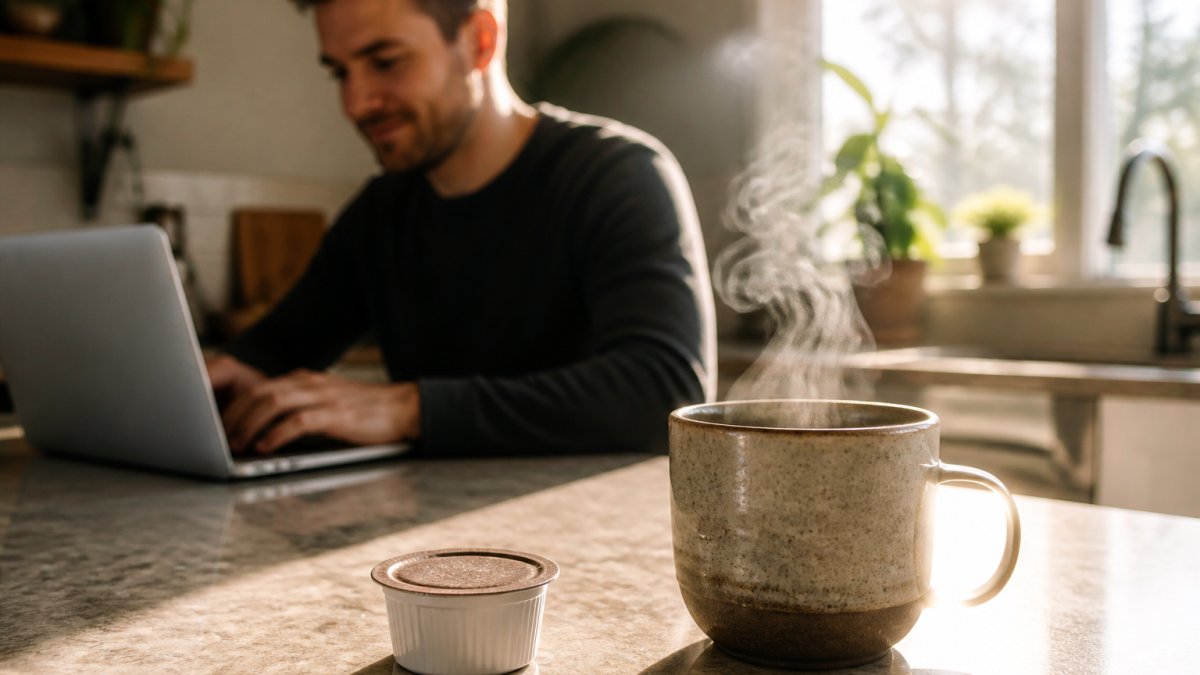
Roasted-to-order coffee pods are pods filled with beans roasted shortly before shipping rather than sitting in a warehouse for months. For anyone drinking a daily brew, that timing is the single biggest factor separating a flat cup from a vibrant one.
What Roast-to-Order Actually Means for Flavor
Roasting triggers hundreds of chemical reactions that create aroma and flavor notes. Those reactions keep going after the roast ends. Oxygen slowly strips the volatile compounds that give coffee its character, and the beans go stale.
How Freshness Dates and Nitrogen Flushing Protect Your Cup
Nitrogen flushing replaces oxygen inside the pod with an inert gas, slowing oxidation dramatically, which is why nitrogen-flushed pods hold their flavor longer than pods sealed in plain air.
Check for two things on the packaging:
- A roast date, not just a "best by" date
- A note that the pod is nitrogen-flushed
Coffee Pod Shelf Life: How Long Do Pods Stay Fresh?
Most coffee pods stay at peak flavor for two to four weeks after the roast date, then decline gradually. Sealed, nitrogen-flushed pods hold acceptable quality for several months, but peak aroma fades well before the printed expiration date.
Reading Expiration Dates vs. Roast Dates
An expiration date tells you when the pod is no longer acceptable to brew; a roast date tells you when the clock started. Very different pieces of information.
Signs Your Pods Have Gone Stale
Stale coffee doesn't always taste obviously bad. It tastes like less. Watch for these signals:
- The aroma when you open the pod is faint or flat
- The brewed cup tastes thin or papery
- You need more pods to get the same brew strength
- The crema, if your brewing system produces it, is thin and pale
If any of these show up, the pods are past their window.
How to Store Coffee Pods for Freshness
Store coffee pods in a cool, dark, dry place in an airtight container, away from heat, light, and moisture. The pantry shelf next to your stove is one of the worst spots in the kitchen.
Why the Bulk Box Is the Real Freshness Problem
Sealed, nitrogen-flushed pods are protected by an inert gas barrier. Once you tear open the outer box or bag, that shared barrier is gone: each pod keeps its own seal, but the pods are now exposed to room air, humidity swings, and kitchen odors, which work on the seals and grounds the longer the box sits open.
Container Options That Actually Work
- Airtight canister with a gasket. A hard-sided container with a silicone or rubber gasket blocks air and moisture far better than a clip-top bag or a rolled-down box. Opaque is better than clear, light degrades aroma compounds.
- Original sealed packaging, resealed. If the box has an inner foil or nitrogen-flushed bag, keep pods in it and fold or clip it closed. That bag is doing more work than any aftermarket canister.
- Vacuum containers. Useful for long-term storage of an unopened bulk order, but overkill for pods you'll brew within two weeks, since every opening reintroduces air.
- Oxygen absorbers. Small iron-based packets in a sealed container pull residual oxygen down. Legitimate for bulk storage, but they supplement a good seal rather than replace it.
Where to Keep Pods and What to Avoid
Heat accelerates oxidation, light breaks down aroma compounds, and moisture invites staleness. Keep pods away from:
- The stovetop or oven
- Direct sunlight on a windowsill
- The refrigerator, unless pods are sealed and you let them reach room temperature before brewing
- The freezer, which introduces moisture every time you open the container
A Simple Rotation System
Date the box when you open it, move older pods to the front of the canister and newer ones to the back, and don't open a reserve box until the first is nearly empty. This first-in, first-out habit is the easiest way to always brew the freshest pod in the house, and it costs nothing.
Water Quality and Brewing Temperature: The Overlooked Freshness Factors
Even perfect pods brew poorly with bad water or the wrong temperature. Most guides skip this entirely, and it's the fastest way to waste fresh coffee.
Reusable vs. Disposable Pods: Cost, Waste, and Flavor Trade-Offs
Reusable pods cut waste and long-term cost, while disposable pods win on convenience and consistency. The right choice depends on how much time you have in the morning, and on whether you're willing to dial in a grind.
The Real Cost-Per-Cup Math
A reusable pod is a one-time purchase; after that, your only recurring cost is the coffee itself. Whole bean typically runs less per ounce than pre-portioned pods, and a reusable pod holds roughly the same dose as a disposable one, usually 8 to 12 grams, depending on the pod and brewer.
What Actually Determines Whether a Reusable Pod Brews Well
A reusable pod is only as good as what you put in it. Three variables matter most:
- Grind size. Pod brewers run short, pressurized extraction cycles. A grind that's too coarse under-extracts and tastes sour; too fine and the machine clogs or the cup turns bitter. Most reusable pod makers publish a recommended grind, and starting there saves trial and error.
- Fill weight. Underfilling leaves room for water to channel around the grounds instead of through them. Overfilling can bow the pod and prevent the lid from sealing. Weigh your dose once, note it, and repeat it.
- Tamping. A light, level tamp is usually enough. Pressing hard compacts the bed and slows flow, which is a common cause of weak or sputtering brews from reusable pods.
Waste and Sustainability Trade-Offs
Disposable pods generate one unit of waste per cup. Reusable pods generate almost none at brewing, but shift the waste question upstream to coffee packaging and to the water and energy used rinsing the pod.
| Factor | Reusable Pods | Disposable Pods |
|---|---|---|
| Upfront cost | Higher (buy once) | Lower per pack |
| Cost per cup | Lower over time, scales with volume | Fixed per pod |
| Convenience | Requires filling, tamping, rinsing | Grab and brew |
| Waste | Minimal at brew time | One pod per cup |
| Flavor control | Full (choose beans and grind) | Set by the roaster |
| Consistency | Depends on your routine | High, pod to pod |
| Freshness control | Depends on your beans | Set by the pack date |
A Hybrid Approach Worth Considering
Many daily drinkers land on a mix: disposable pods on weekday mornings when speed matters, reusable pods on weekends when there's time to weigh and tamp, convenience without abandoning the cost and waste savings of whole beans.
Troubleshooting Common Coffee Pod Brewing Issues
Most pod brewing problems trace back to three causes: stale pods, scale buildup, or the wrong water temperature. Work through them in that order.
- Weak, watery cup: Pods may be stale, or your machine needs descaling. Try a fresh pack before assuming the machine is at fault.
- Sour or sharp taste: Usually under-extraction from water that's too cool. Run a descale cycle and check your machine's temperature.
- Bitter, harsh taste: Often over-extraction or water that's too hot. Also check that you're not reusing a pod.
- Inconsistent results pod to pod: Usually a sign the pods are near the end of their freshness window.
- Machine sputtering or weak flow: Scale buildup. Descale on the schedule your brewer's manual recommends.
What to Look for in Fresh Coffee Pods for Daily Brew
The best fresh coffee pods for daily brew carry a roast date, arrive nitrogen-flushed, and match your brewing system. Everything else is secondary.
Build a short checklist before you buy:
- Roast date printed on the packaging
- Nitrogen-flushed or vacuum-sealed
- Compatible with your brewing system
- Organic or fair-trade certification if that matters to you
- Compostable or recyclable pod material
- Decaf or specialty blend options if you want variety
- Auto-delivery or subscription model that fits your schedule
Frequently Asked Questions
How can you tell if a coffee pod is fresh?
Check the roast date, not just the expiration date. Fresh coffee pods for daily brew typically taste best within 2-4 weeks of roasting. Look for a strong aroma when you open the pod and a rich, full flavor in the cup. If the coffee tastes flat, papery, or bitter without complexity, the grounds have likely oxidized. Nitrogen-flushed pods and those with a visible freshness date give you the best signal that what's inside still has life.
Do coffee pods expire or lose flavor over time?
Coffee pods do lose flavor over time, though the sealed packaging slows the process. Whole beans and grounds start oxidizing the moment they're roasted, and pods are no exception. A sealed, nitrogen-flushed pod can hold acceptable flavor for several months past its roast date, but peak flavor happens in the first few weeks. Once you open the pod, the clock speeds up dramatically. Coffee pod shelf life depends heavily on packaging quality and storage conditions.
Are fresh-roasted coffee pods worth the extra cost?
If you drink coffee daily, the flavor difference is noticeable. Mass-produced pods can sit in warehouses for months before reaching a shelf. Roasted-to-order pods skip that delay, so the grounds arrive closer to peak flavor. The cost-per-cup is higher than standard grocery pods, but you're paying for aroma, brew strength, and a flavor profile that hasn't faded. For daily brewers who care about taste, the upgrade often justifies itself.
What is the difference between mass-produced and small-batch coffee pods?
Mass-produced pods are roasted in large volumes, packaged, and distributed through warehouses, which adds weeks or months before they reach you. Small-batch pods are roasted in smaller quantities, often to order, and shipped faster. That shorter timeline preserves more of the volatile oils that carry aroma and flavor. Small-batch roasters also tend to offer more variety in roast profiles and single-origin options, giving you more control over what ends up in your cup.
The real challenge with daily coffee isn't finding a pod. It's finding one that still tastes fresh on day twenty, not just day one. Kaos coffee roasts to order and ships fast, so your pods arrive close to the roast date instead of months past it. Our lineup covers blends, single-origin options, and convenient pods, all built for a busy, unpredictable schedule. Get started with Kaos coffee and make your daily brew the best part of your morning.