

Fresh Roasted Coffee vs Supermarket Brands: 2026 Guide
Table of Contents
- Fresh Roasted Coffee vs Supermarket Brands: The Core Trade-Off
- Side-by-Side Comparison: Fresh Roasted vs Grocery Store Coffee
- Why Coffee Roast Date Matters More Than a Best-Before Date
- How to Store Coffee Beans to Protect Flavor and Aroma
- Whole Bean vs Ground Coffee: Which Format Keeps Freshness Longer?
- Best Coffee Beans for Home Brewing: Matching Roast to Method
- Price Per Cup, Label Reading, and When Supermarket Coffee Wins
- Conclusion: Choosing Based on Your Routine
- Frequently Asked Questions
Last Updated: October 4, 2026
Fresh Roasted Coffee vs Supermarket Brands: The Core Trade-Off
Fresh roasted coffee is packaged and sold within days of leaving the roaster, while supermarket brands are built to sit on a shelf for months.
At Kaos coffee, we roast to order, so your beans are days old, not months. But the grocery aisle is not worthless. The real question is what you are optimizing for: peak flavor or a bag that survives a pantry for a year.
Shelf Stability vs Flavor: Two Different Goals
Supermarket coffee and fresh-roasted coffee are engineered for opposite outcomes. Mass-market roasters prioritize shelf stability, hence best-before dates months out. Fresh roasters prioritize flavor, hence a roast date and a narrow peak window.
Neither goal is wrong. If you drink a bag in two weeks, freshness wins. If you buy in bulk and forget about it, shelf stability is doing you a favor.
Side-by-Side Comparison: Fresh Roasted vs Grocery Store Coffee
Here is the trade-off in one view, so you can see where each option actually wins.
| Factor | Fresh Roasted Coffee | Supermarket Brands |
|---|---|---|
| Time since roasting | Days | Weeks to months |
| Date on the bag | Roast date | Best-before date |
| Flavor at peak | Full aroma, sweetness, complexity | Consistent but muted |
| Shelf life | Shorter, best used within weeks | Long, built for storage |
| Packaging focus | One-way valve, degassing | Sealed for durability |
| Price per cup | Higher | Lower |
| Best for | Daily drinkers chasing flavor | Backup, bulk, tight budgets |
The pattern is clear: you trade peak flavor for convenience and cost. But a table only tells you what to expect, not whether the difference is real in your kitchen.
A Fair Taste Test You Can Actually Run
Most comparisons are not controlled: someone brews each bag differently and credits the coffee for a difference the grinder, dose, or water caused. For a result you can trust, hold everything constant except the beans.
Use this setup:
- Same grinder, same grind setting. Use the same burr grinder at the same setting; a blade grinder's uneven particles muddy the comparison.
- Same water. Use the same filtered water at the same temperature. Water chemistry and brew temperature move flavor as much as the bean does.
- Same dose and ratio. Weigh both on a scale; a common starting point is 1:16 coffee-to-water by weight, adjusted to taste.
- Same method and timing. Brew both as pour-over, both as drip, or both as French press. Do not compare fresh espresso against supermarket drip.
What a Controlled Test Can and Cannot Tell You
A fair test can reveal real differences in aroma, sweetness, body, and how long the flavor lingers. It cannot tell you which coffee is objectively better.
Treat the test as a way to separate freshness effects from preference. If the fresh bag wins on aroma but you prefer the grocery bag's heavier cup, that is useful information, not a failure.
The Resting Window Nobody Mentions
Fresh does not mean same-day. Coffee roasted today and brewed tomorrow often tastes flat or sharp because it is still releasing carbon dioxide, which interferes with even extraction. Most roasters recommend resting beans a few days after the roast date.
The ideal rest varies: lighter roasts and pour-over often benefit from a week or more, while darker roasts and espresso can taste better sooner.
Why Coffee Roast Date Matters More Than a Best-Before Date
The roast date tells you how fresh the coffee actually is; a best-before date only tells you how long the roaster thinks it stays sellable. Those are not the same thing.
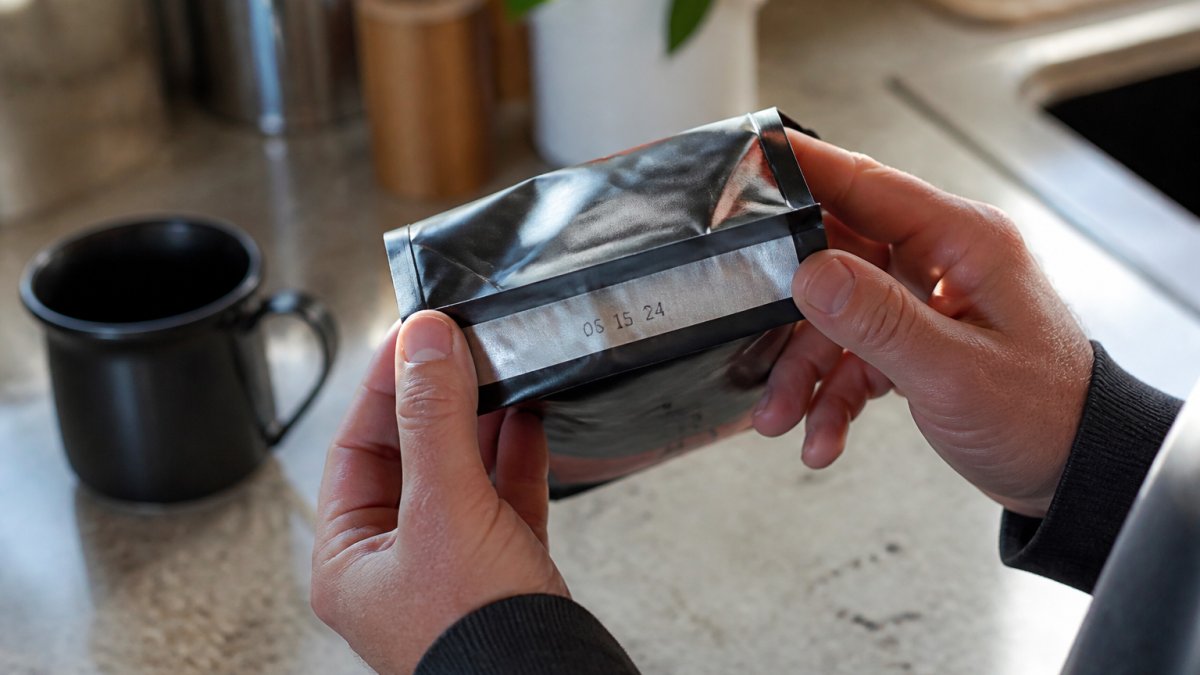
A best-before date can sit six to twelve months out from roasting, so by the time you brew that bag it may have spent months losing the aromatics that make it worth drinking.
If a bag has no roast date anywhere, treat that as a signal. Roasters proud of their turnaround print the date. When it is missing, you are usually looking at coffee that was roasted long before it reached the shelf.
How to Store Coffee Beans to Protect Flavor and Aroma
Whole beans stay fresher longer in an airtight, opaque container away from heat, light, and moisture. Oxygen is the main enemy, and it starts working the moment the bag is opened.
Follow these storage rules:
- Keep beans in the original bag if it has a one-way valve, or move them to an airtight canister.
- Store at room temperature, not the fridge, where moisture and odors creep in.
- Avoid the freezer for daily-use beans; repeated thawing adds moisture.
- Buy in quantities you will finish within a few weeks.
The goal is simple: slow oxidation so the flavors you paid for survive longer.
Packaging Features That Actually Preserve Freshness
A one-way valve is the feature worth looking for. It lets carbon dioxide escape after roasting while keeping oxygen out, slowing the staling process. Fully sealed, valve-free bags trap that gas and can taste flat or sharp when opened.
Opaque packaging matters too, since light degrades coffee oils. To test a valve, squeeze the bag gently: a working one releases air without letting it back in.
Whole Bean vs Ground Coffee: Which Format Keeps Freshness Longer?
Whole bean coffee keeps its flavor significantly longer than pre-ground, because grinding exposes far more surface area to oxygen. Once ground, coffee can lose noticeable aroma within days.
That does not make pre-ground useless. If your routine is a quick scoop into a drip machine before you are fully awake, ground coffee is convenient and still beats no coffee at all.
Best Coffee Beans for Home Brewing: Matching Roast to Method
The best beans for your kitchen are matched to your brewing method and taste, not the loudest label.
- Espresso: medium to dark roasts with enough body to stand up to pressure.
- Pour-over: medium roasts that let origin flavor and acidity show through.
- Drip: medium roasts that stay balanced across a full pot.
- French press: medium to dark roasts with a heavier body and texture.
Roast level shapes flavor more than almost anything else. Dark roasts lean smoky and bold; lighter roasts keep more natural sweetness and complexity. Buy from roasters who list origin and roast level, and you can match a bag to your setup instead of guessing.
Price Per Cup, Label Reading, and When Supermarket Coffee Wins
Supermarket coffee genuinely wins on two fronts: price and shelf life. A grocery bag costs less per cup and will not go stale in your pantry the way a fresh bag can if you forget about it.
But "cheaper per cup" deserves actual math, because the gap is often smaller than the sticker price suggests.
Doing the Cost-Per-Cup Math
Cost per cup is total bag price divided by the cups you actually get.
A typical drip dose is around 10 grams per 6-ounce cup, while a stronger mug or French press may use 15 to 20 grams.
Run that against price and the picture sharpens. A lower-priced grocery bag spread across many cups lands at a low cost per serving.
How to Read a Coffee Label in 30 Seconds
Labels are where the real differences hide. Use this checklist every time you pick up a bag:
- Roast date vs. best-before date. A roast date tells you when the coffee was roasted; a best-before date tells you how long the seller thinks it stays sellable, which can be many months out. The roast date is the more useful signal.
- Whole bean or pre-ground. Whole bean holds flavor longer; pre-ground trades freshness for convenience.
- Origin or region. A named origin suggests the roaster is sourcing with intent. A vague "100% coffee" tells you almost nothing.
- Roast level. Light, medium, or dark shapes flavor more than almost any other factor. If it is not stated, you are guessing.
If you can answer those questions, you know more about that bag than most shoppers ever will.
When Supermarket Coffee Is the Smarter Buy
The grocery aisle is not a consolation prize. There are real cases where it wins:
- You drink slowly. If a bag lasts a month or more, a shelf-stable option will not go stale before you finish it, while a fresh bag might.
- You keep coffee mainly for guests. Occasional use favors a bag that survives the pantry.
- You find recently roasted stock. Some grocery stores move volume quickly, and a bag with a recent roast date and a sealed valve can be genuinely fresh. Check the date, not the aisle.
- You want whole beans with transparent sourcing. A growing number of grocery brands list origin, roast level, and roast dates, and are worth considering on their own merits.
Where supermarket coffee loses is peak flavor: you pay less, but you also get less of the aroma and sweetness that fresh coffee delivers at its best.
Do not judge freshness by smell alone at the store. Aroma fades over time, and a stale bag can still smell pleasant when you open it. The roast date on the package is the reliable signal, not your nose.
When comparing two bags, divide price by net weight to get price per ounce, then estimate cups from your typical dose. That single calculation usually settles the fresh-versus-grocery question faster than any marketing claim.
Conclusion: Choosing Based on Your Routine
The right choice comes down to how fast you drink coffee and what you want from it. If you want peak flavor and finish a bag within a few weeks, fresh roasted coffee is worth it.
That is exactly why we roast to order at Kaos coffee. You get blends and single-origin beans with maximum flavor and aroma, convenient pods for the mornings you cannot slow down, and fast, reliable delivery that keeps the gap between roast and cup short.
Frequently Asked Questions
Does freshly roasted coffee taste better than supermarket coffee?
In a fair side-by-side comparison, fresh roasted coffee usually shows more aroma, sweetness, and complexity because the compounds that create flavor have not had time to fade. Supermarket coffee is built for shelf stability, so it can sit for months before you open it. That said, some well-known grocery brands have been cited by coffee experts for fresh-tasting beans and balanced flavor, so the gap is not always as wide as people assume. The deciding factor is usually the roast date, not the store.
How long after roasting is coffee freshest?
Most roasters point to a window of roughly 7 to 21 days after the roast date for peak flavor. During the first few days, coffee releases carbon dioxide, which can make brewing uneven. After that, the beans settle into their best drinking window. Past three to four weeks, oxidation starts to flatten aroma and sweetness. This is why a roast date printed on the bag tells you far more than a 12-month best-before period, which speaks to safety and shelf life, not flavor.
Is freshly roasted coffee worth the extra cost?
It depends on how you brew and how fast you drink it. Price per cup is the honest comparison: grocery coffee can cost less upfront, while fresh-roasted bags cost more. If you brew daily and finish a bag within three weeks, the flavor difference is noticeable and the cost per cup stays reasonable. If a bag lasts you two months, you lose most of the freshness advantage before you reach the bottom.
How should you store coffee beans to keep them fresh?
Keep whole beans in an airtight, opaque container at room temperature, away from light, heat, and moisture. Do not store them in the fridge, where condensation and food odors creep in. A bag with a one-way valve works well because it lets carbon dioxide escape without letting oxygen in. Buy in quantities you will finish within three to four weeks, and grind right before brewing. These habits matter more than any single storage gadget you can buy.
Can supermarket coffee beans still be good quality?
Yes. Supermarket coffee is not automatically bad; it is designed around shelf stability, which means larger-scale roasting and packaging built for a 12-month best-before period. Some grocery-available brands earn praise from coffee experts for fresh-tasting beans and balanced flavor. The practical move is to check the roast date, look for whole beans over pre-ground, and pick bags with a one-way valve. If those boxes are checked, a grocery bag can absolutely deliver a solid cup.